

Journaling for Wellness
1. Supports Mind–Body Regulation
“Writing down thoughts and affirmations helps calm the nervous system, giving the brain a place to process emotions instead of holding everything internally.”
2. Builds Emotional Clarity
“Journaling creates space to slow down, reflect, and become more aware of your patterns, triggers, and wins—an essential step in emotional regulation.”
3. Encourages Self-Compassion
“Positive affirmations reshape internal dialogue, helping you speak to yourself with the same kindness you show others.”
4. Reduces Stress & Overwhelm
“Putting worries, to-dos, and reflections on paper reduces mental load and frees up cognitive space, easing stress and tension.”
5. Improves Mood & Resilience
“Gratitude writing strengthens the brain’s ability to notice the good, which can improve mood, increase resilience, and shift daily perspective.”
6. Creates a Daily Ritual of Care
“A few minutes of writing becomes a grounding ritual—your reminder to check in with yourself, breathe, and reconnect.”
7. Helps Track Habits & Healing
“Notebooks offer a simple way to notice progress, track habits, and celebrate small steps in your wellness journey.”
8. Bridges Mental & Physical Wellness
“When we write, we regulate—processing stress, organizing thoughts, and supporting nervous system balance that directly impacts pelvic, emotional, and whole-body wellbeing.”
Gua Sha Benefits
Supports lymphatic drainage
Reduces puffiness and inflammation
Relieves muscle tension and aches
Improves circulation
Eases jaw, neck, shoulder, hip, and abdominal tightness
Promotes relaxation and nervous system regulation
Helps reduce bloating and supports digestive flow
Releases fascial restrictions
Supports pelvic and abdominal wellness
Enhances overall mobility and tissue health
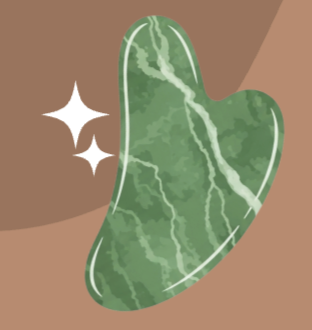
How to Use a Gua Sha Tool (Simple, Safe Technique)
1. Prep the Skin
Apply a small amount of oil or lotion so the tool glides smoothly without pulling the skin.
2. Hold the Tool at a 30–45° Angle
The stone should lay almost flat against the skin, not perpendicular. This ensures gentle pressure and avoids irritation.
3. Use Light to Medium Pressure
Think “comfortably firm,” not aggressive. You should never bruise or feel pain.
4. Always Stroke Upward or Outward
This supports lymphatic flow toward the nearest lymph nodes.
Examples:
Face: from center outward toward ears.
Neck: downward toward the collarbone (lymph drainage route).
Abdomen: clockwise circular motions or upward strokes.
Legs: upward toward groin lymph nodes.
Arms: upward toward the underarm.
5. Repeat Each Stroke 5–10 Times
Slow and steady strokes are more effective than fast ones.
6. End With Deep Breathing
Finish with slow belly breaths to reinforce relaxation and parasympathetic activation.
Gentle Safety Notes
Avoid broken skin, active infection, open wounds, or active flare-ups.
Stop if you feel sharp pain.
Do not use aggressive scraping — it should feel soothing and warm.
When to use Gua Sha?
Jaw tension / TMJ pain
Neck tightness
Shoulder stiffness
Hip or low back tension
Bloating or sluggish digestion
Pelvic tightness or postural holding patterns
PMS bloating / period discomfort
Stress, anxiety, overwhelm
Lymphatic congestion (face, abdomen, neck)